
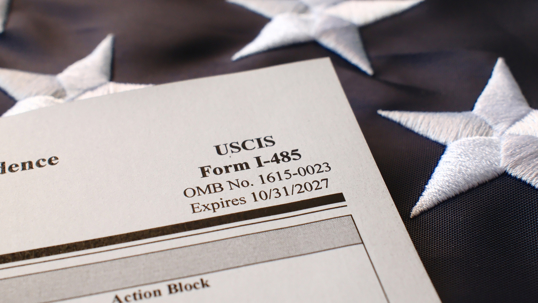
For many years, some applicants approached Adjustment of Status (“AOS”) as though filing Form I-485 was simply the final administrative step in obtaining lawful permanent residence. Increasingly, however, USCIS is signaling that adjustment is not guaranteed — even where an applicant may technically qualify under the Immigration and Nationality Act (“INA”).
The modern USCIS adjudication environment reflects heightened scrutiny, broader discretionary review, and a growing willingness to deny cases that present credibility, compliance, inadmissibility, or discretionary concerns. Applicants should understand an important reality: eligibility alone may not be enough.
Under USCIS policy guidance, most family-based and employment-based adjustment applications are discretionary forms of relief. USCIS officers are directed to evaluate the “totality of the circumstances” and determine whether an applicant warrants a favorable exercise of discretion.
The governing statutory framework remains:
INA § 245(a)INA\ §\ 245(a)INA § 245(a)
USCIS specifically states in its Policy Manual that even where an applicant satisfies the statutory requirements for adjustment, the agency may still deny the application if it determines the applicant does not merit a favorable exercise of discretion.
What Does “Discretion” Mean in an I-485 Case?
Discretion means USCIS officers are not merely checking boxes on a form. Officers are instructed to weigh positive and negative factors in determining whether lawful permanent resident status should be granted.
According to USCIS guidance, officers may consider issues such as:
- Immigration history and prior status violations;
- Unauthorized employment;
- Misrepresentations or inconsistent statements;
- Criminal history, even where no conviction bars adjustment;
- Failure to maintain lawful status;
- Public safety concerns;
- Prior removals or immigration violations;
- Credibility concerns during the interview process;
- Evidence suggesting fraud or misuse of nonimmigrant intent;
- Failure to disclose material facts;
- Conduct reflecting poorly on moral character or judgment.
USCIS also directs officers to examine whether the applicant has demonstrated sufficient positive equities to outweigh any negative considerations.
Importantly, some issues that may not independently create statutory inadmissibility can still negatively affect discretionary review.
A Technically Eligible Case Can Still Be Denied
One of the most misunderstood aspects of Adjustment of Status is that approval is not automatic merely because:
- the applicant entered lawfully,
- an I-130 or I-140 is approved,
- a visa number is available, or
- the applicant has no criminal convictions.
USCIS expressly states that lawful permanent residence is a discretionary benefit in most adjustment categories.
This means that poorly prepared filings, inconsistent documentation, problematic social media activity, inaccurate forms, admissions made during interviews, prior immigration violations, or unresolved factual discrepancies can become highly significant.
Recent USCIS guidance and policy trends also suggest increased emphasis on:
- detailed review of admissibility,
- fraud detection,
- ongoing eligibility verification,
- discretionary balancing,
- and interview-based credibility determinations.
Why “Do-It-Yourself” Immigration Filings Can Be Risky
Many applicants underestimate how much legal analysis occurs before a properly prepared I-485 package is ever filed.
A filing strategy often requires legal review of:
- prior entries and exits,
- visa history,
- intent at entry,
- criminal records,
- prior petitions,
- social media and sworn statements,
- tax filings,
- public charge issues,
- employment history,
- marriage evidence,
- immigration court history,
- waivers,
- and potential inadmissibility concerns.
In some cases, a filing made prematurely or without sufficient legal review can create long-term immigration consequences, including denials, Notices to Appear (“NTAs”), fraud allegations, or future inadmissibility concerns.
Applicants should also understand that statements made to USCIS — whether in forms, interviews, or supporting affidavits — become part of a permanent immigration record that may later be reviewed in removal proceedings, naturalization proceedings, or future petitions.
Adjustment Strategy Matters More Than Ever
The current USCIS environment increasingly rewards carefully documented, strategically prepared, and legally vetted filings. A strong case presentation is not simply about “filling out forms.” It involves anticipating discretionary concerns before USCIS raises them.
Experienced immigration counsel can assist in:
- identifying discretionary risk factors;
- reviewing admissibility concerns;
- preparing interview strategy;
- organizing supporting evidence;
- addressing prior immigration issues proactively;
- minimizing inconsistent statements;
- evaluating whether adjustment is even the best procedural option;
- and determining whether consular processing, waivers, or delayed filing strategies should instead be considered.
No attorney can ethically guarantee approval of an Adjustment of Status application. However, careful legal preparation may substantially reduce avoidable risks and help applicants present the strongest possible case under current USCIS scrutiny.
For applicants considering an I-485 filing, the assumption that adjustment “will be granted as a matter of course” is increasingly dangerous. USCIS has made clear that Adjustment of Status remains a discretionary benefit — and discretion matters.